Flip Skater
- 4.4
- Rating
- 50.00M
- Installs
- Free
- Price
 Analysis by App-foxy
Flip Skater is the kind of sports game I can understand immediately: launch a skater, perform flips and other tricks, and try to make each run look cleaner than the last. Developed by Miniclip.com, it focuses on quick sessions rather than a full skateboarding simulation. I found that approach appealing during the first few days because it is easy to pick up when I have only a short break, yet the timing still gives me something to improve.
The important question is not whether it can entertain me for a few minutes. It can. The more useful question is whether it deserves a permanent place on a phone after the first-week novelty fades. My answer is qualified. Flip Skater works best as a compact reflex game with a satisfying practice loop, but players looking for deep skating physics, a broad career mode, or a constantly changing competitive experience may eventually want something more substantial.
What the first week feels like
The opening appeal comes from the simple relationship between action and result. I do not need to learn a large control scheme before attempting a trick. That makes the game friendly for casual players, younger users, and anyone who wants a sports title without the commitment of a long match. Its Everyone age rating also fits that accessible presentation.
You May Also Like

 Google Keep - Notes and lists
Google Keep’s Quiet Growth Shows the Appeal of Simpler Notes
As mobile work gets busier, Google Keep keeps winning a simple contest: capture a thought quickly, find it later, and get on with the day.

 Blood Strike: 2.5 Anniversary
Blood Strike’s Loadouts Turn Every Drop Into a Tactical Gamble
A close look at Blood Strike’s custom loadouts: how fast access to signature weapons reshapes its battle royale rhythm, rewards preparation, and narrows the gap between fights.

 Pandora - Music & Podcasts
Pandora’s Music Is Easy to Start, but Harder to Recover
Pandora’s strength is its low-effort path from a seed to a station. Its weak spot is how much confidence it asks you to place in connection, setup, and quiet recovery.

 8 Ball Pool
 Is Built on Rivalries, Rematches, and Routine
A close look at the rivalries, rematches, shared routines, and unanswered safety questions that turn a quick pool match into a persistent mobile community.

 Samsung Music
’s Quiet Strength Is Playing What You Already Own
Its reach comes less from spectacle than from dependable access to a personal library. That simplicity is both the app’s strongest retention engine and its ceiling.

 AccuWeather: Weather Radar
AccuWeather Review: A Quick, Clear Forecast for Everyday Decisions
For everyday plans, the best forecast is the one you can understand quickly. AccuWeather makes rain timing, radar, and local conditions easy to act on, with a few trade-offs.
More From Our News Desk



At first, every successful flip feels like a small achievement because I am learning how much attention the motion requires. A run can look effortless when I watch a skilled player, but my own attempts quickly show that timing matters more than simply tapping as fast as possible. That creates a useful early rhythm: try, miss, notice what went wrong, and immediately attempt another run.
I especially liked playing it in short gaps during an ordinary day. If I am waiting for an appointment or taking a quick break from work, I can open it without needing to remember a complicated storyline or coordinate with other people. A few attempts are enough to feel that I have played something, while a longer session gives me room to chase a cleaner sequence.
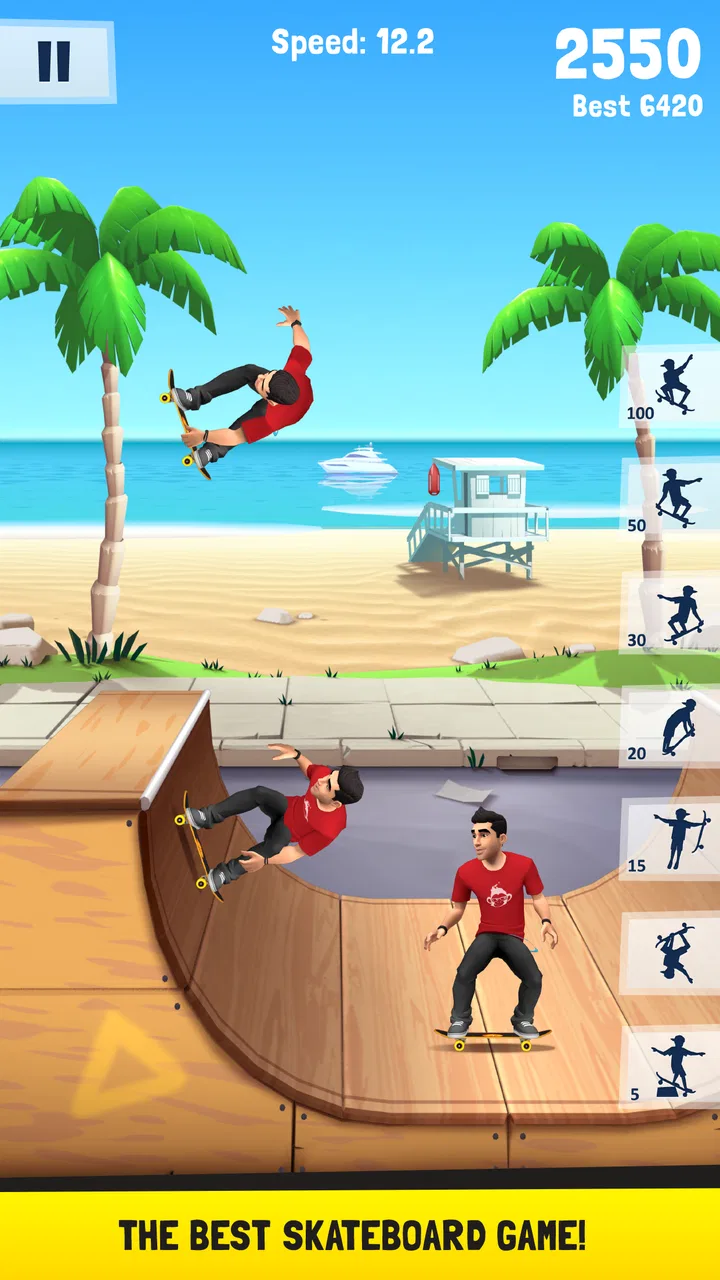
The store summary presents it as a game about becoming a cool skater and showing off extreme tricks. In practice, I would describe the appeal more modestly: it is a timing-focused arcade sports game where style comes from improving control. That distinction matters. The fun is not the same as exploring a realistic skate park; it is closer to polishing a repeatable action until the result feels under control.
New players should resist the temptation to treat every failed attempt as bad luck. I found it more productive to watch the character’s movement and identify whether I acted too early, too late, or tried to force a sequence before I was ready. This makes the first week feel less random and turns mistakes into useful feedback.
Another practical advantage is the low barrier to entry on older devices. The current version is 2.78, and the game supports Android devices running version 6.0 or later. That does not guarantee identical performance on every phone, but it does make the audience broader than it would be for a demanding modern sports title. I would still keep the device updated and close unnecessary apps if gameplay feels less responsive.
Why the controls matter more than the theme
Skateboarding gives the game its personality, but the lasting hook comes from control. I can enjoy the visual idea of performing tricks, yet I keep returning only when the timing feels understandable. The best sessions are not necessarily the ones with the biggest-looking run. They are the sessions where I can tell that my input made a difference.
This is also where the game separates itself from ordinary sports alternatives. A football or basketball game usually asks me to manage teams, opponents, positioning, or a full sequence of play. Flip Skater narrows the focus to a performer and a trick attempt. That makes it less demanding, but also less varied. It is a good choice when I want a small mechanical challenge, not when I want the strategic layers of a traditional sports game.
A useful first-week habit is to change only one part of my approach after a failed run. If I alter timing, speed, and trick choice all at once, I cannot tell what helped. Repeating a similar attempt while adjusting one decision makes improvement easier to notice. This sounds basic, but it prevents the game from becoming a cycle of random tapping.
Who gets the strongest early value
I would recommend the opening experience to players who enjoy arcade games built around repetition. It suits someone who likes seeing a small personal improvement every few minutes, especially if that person prefers a sports theme over abstract puzzles. It can also work well for families because the premise is easy to explain and the age rating is Everyone.
It is less suitable for someone expecting a realistic skating sandbox. The game is not the choice I would make for detailed board control, open-ended exploration, or a long narrative about a skater’s career. Players who need constant novelty may also find the central action narrow once the initial excitement has settled.
What remains after the novelty fades
By the second part of a month, the question changes from “Can I perform this trick?” to “What am I working toward now?” That is where a compact arcade game needs a reliable reason to continue. In my experience, Flip Skater’s recurring value depends heavily on whether I enjoy self-improvement. If I do, short sessions remain satisfying. If I need a steady stream of new systems, the experience can feel smaller than it did at the beginning.
The game’s free price makes that trial period easy. I can install it without paying upfront and decide whether the core movement suits me. In-app purchases range from $1.99 to $14.99 per item, so I would approach optional spending carefully and treat it as a personal choice rather than a requirement for discovering whether the controls are enjoyable.
That free-to-try structure is useful, but it also changes how I judge the game. I do not expect the same breadth as a premium console-style sports experience. Instead, I ask whether the basic loop remains pleasant without spending money. For me, the answer is yes for casual play, provided I accept that the main reward comes from better execution rather than a deep collection of unrelated activities.
The game has a sizable audience, with over ten million installs, and its average rating is 4.4 from around 159 thousand ratings. Those figures suggest that the straightforward formula has reached many players, but they should not replace personal testing. A popular quick-play game can still be a poor fit for someone who dislikes repeating similar actions.
How to build a sustainable play habit
I get more value when I give each session a small purpose. One day I might focus on landing consistently. Another day I might try to improve the smoothness of a familiar sequence. This prevents me from opening the game automatically, making careless attempts, and closing it with the feeling that nothing happened.
Short, intentional sessions also help with the game’s strongest limitation: the central activity can become repetitive. I would rather play for a few focused minutes than continue after my attention has dropped. Once I start tapping without observing the timing, the game stops being a skill exercise and becomes noise.
A second useful habit is to stop after a genuinely good run instead of immediately chasing an even better one. Ending on a successful attempt gives the next session a clear target and protects the game from turning into an exhausting score chase. That approach is especially helpful for people who enjoy the idea of improvement but do not want a game taking over their free time.
For a parent deciding whether to let a child try it, the accessible age rating is reassuring from a content perspective, but I would still pay attention to the child’s spending behavior. Because purchases are available, device-level purchase controls are sensible. The game may be free to start, yet “free” does not mean every optional item is free.
Where it sits beside other sports games
Compared with a full skateboarding game, Flip Skater is easier to start and faster to play, but it offers less room for exploration and simulation. Compared with endless runners, it has a more specific physical identity and a stronger connection between trick timing and the fantasy of skating. Compared with competitive multiplayer sports games, it is quieter and more self-contained, with less pressure to keep up with other players.
That middle position is its strength. I would choose it over a larger sports game when I want a focused break and do not want menus, team management, or a long match. I would choose a deeper skating title instead when I want to experiment freely, learn a broader control system, or feel that I am inhabiting a complete skateboarding world.
The comparison also explains why the game may remain useful even after the first month. It does not need to replace every other sports game. It only needs to fill the quick-session role well. If I already have several demanding games installed, this can serve as the low-commitment option. If I am looking for one definitive sports game, its narrow focus may leave me wanting more.
The maintenance burden and everyday friction
Maintaining a place for Flip Skater on my phone is relatively easy if I treat it as an occasional reflex game. I do not need to schedule long sessions or remember a complicated plot. The main maintenance is personal: keeping my expectations realistic and deciding whether I still enjoy practicing the same basic skill.
That is a different kind of burden from storage or setup. A game can be technically convenient but mentally repetitive. After the first rush of discovering the controls, I need to supply my own reasons to return. A personal score target, a cleaner sequence, or a short daily challenge can help, but the game itself may not always provide enough variety for every player’s long-term routine.
There is also a responsiveness issue common to timing-based games. If my hands are tired, the screen is dirty, or the phone is struggling with other tasks, a missed action can feel harder to interpret. I found it worthwhile to play with the device held steadily and to avoid judging the controls during a distracted session. This does not transform the game, but it makes practice more consistent.
Players using an older compatible phone should pay attention to how stable the game feels rather than relying only on the operating-system requirement. A device can meet the minimum software version and still provide a less comfortable experience if it is busy or poorly maintained. Closing background tasks before a focused session is a simple way to reduce avoidable frustration.
What causes fatigue over time
The first source of fatigue is repetition without a goal. Performing the same kind of action can be relaxing when I am improving, but dull when every attempt feels interchangeable. The second is failure without diagnosis. If I cannot understand why a trick failed, I may blame the game and lose interest even when a small timing adjustment would help.
The third is the gap between the fantasy and the actual format. The idea of skating suggests freedom, movement, and creative expression. A compact arcade structure naturally provides only part of that fantasy. Anyone expecting a broad skate park or a realistic career journey should know that the appeal is concentrated in the trick-focused interaction.
Optional purchases can create another form of fatigue if I start thinking about them more than the skating itself. I prefer to decide in advance whether I am willing to spend anything. If the answer is no, I can enjoy the free starting point as a test of the game’s core loop. If the answer is yes, I would still avoid buying impulsively just to overcome a temporary losing streak.
The player count and review volume show that many people have tried it, and the average rating is strong. Still, a broad audience does not mean universal staying power. I would give it a week of ordinary use rather than judging it from a single impressive session. If I am already bored by the repeated timing loop after that trial, more play is unlikely to change my preference.
Small techniques that improve the experience
My first technique is to separate learning from score chasing. During a learning session, I focus on the movement and accept modest results. During a score session, I use the timing I already understand and avoid experimenting constantly. Mixing both goals makes every miss feel more discouraging.
My second technique is to use natural breaks as a stopping rule. I might play while waiting for a coffee or before starting another task, then close the game after the break ends. This keeps it in the role of a refreshing pastime rather than allowing a simple trick loop to consume an entire evening.
My third technique is to notice whether I am enjoying the attempt or only the result. If I like the process of adjusting timing, the game has a good chance of staying installed. If I care only about a perfect outcome, repeated misses can quickly outweigh the fun. That distinction helps me decide whether this is a healthy fit for my play style.
My long-term verdict
After the novelty fades, Flip Skater earns lasting space only for a specific kind of player: someone who likes brief, repeatable sports challenges and is happy to create personal goals. Its free entry, approachable controls, Everyone rating, and low-commitment sessions make it easy to recommend as a trial. The game also benefits from coming from Miniclip.com, a developer familiar with accessible mobile entertainment.
I would not recommend it as a replacement for a deep skateboarding simulation or a feature-heavy sports game. Its central loop is focused, and that focus can become a limitation when I want exploration, strategy, or a strong sense of progression. Players who need constant new content should probably choose a broader alternative rather than expecting this one to transform into something it was not designed to be.
For me, the lasting value is real but conditional. I can return to it when I want to sharpen timing, relax with a few attempts, or fill a small gap in the day. I would not keep playing for hours every day, and I do not think the game needs to demand that kind of commitment to be worthwhile.
In the end, Flip Skater is best understood as a compact arcade skating game, not a complete skateboarding lifestyle. If the idea of improving one trick at a time sounds satisfying, the free download is an easy experiment. If you want a large world, detailed simulation, or endless variety, I would point you toward a more ambitious sports game instead. Its lasting space on my phone comes from convenience and controllable challenge, and that is enough—as long as I play it in the role it handles best.
FAQs for Flip Skater
01What are the main features of Flip Skater?
Flip Skater offers a variety of thrilling features, including a wide range of skateboards to unlock, diverse skate parks set in exotic locations, and customizable characters. The game provides realistic physics and stunning graphics, enhancing the skating experience. Players can perform tricks, participate in challenges, and compete on global leaderboards.
02Is Flip Skater available for both Android and iOS?
Yes, Flip Skater is available for download on both Android and iOS platforms. You can find it on the Google Play Store for Android users and the App Store for iOS users. The game is free to download, with optional in-app purchases to enhance your gaming experience.
03Does Flip Skater require an internet connection to play?
Flip Skater can be played offline, allowing you to enjoy the game without an internet connection. However, some features, like global leaderboards and certain in-app purchases, may require an internet connection to function properly. Ensure you connect occasionally to access all features.
04Are there in-app purchases in Flip Skater?
Yes, Flip Skater includes in-app purchases that allow players to buy new skateboards, customize their characters, and unlock additional content. While these purchases enhance gameplay, they are entirely optional. Users can enjoy the core experience without spending money, though some premium items may provide advantages.
05What age group is Flip Skater suitable for?
Flip Skater is designed to be enjoyed by a wide range of age groups, typically from 4 years and up, making it suitable for both kids and adults. The game does not contain any inappropriate content and offers a fun, engaging experience for skateboarding enthusiasts of all ages.
Pros
- Smooth and intuitive controls.
- Vibrant graphics and animations.
- Variety of skateboards to unlock.
- Challenging levels and locations.
- Offline play available.
Cons
- In-app purchases can be pricey.
- Ads can interrupt gameplay.
- Limited soundtrack variety.
- Occasional lag on older devices.
- Content updates are infrequent.

Flip Skater
Gallery